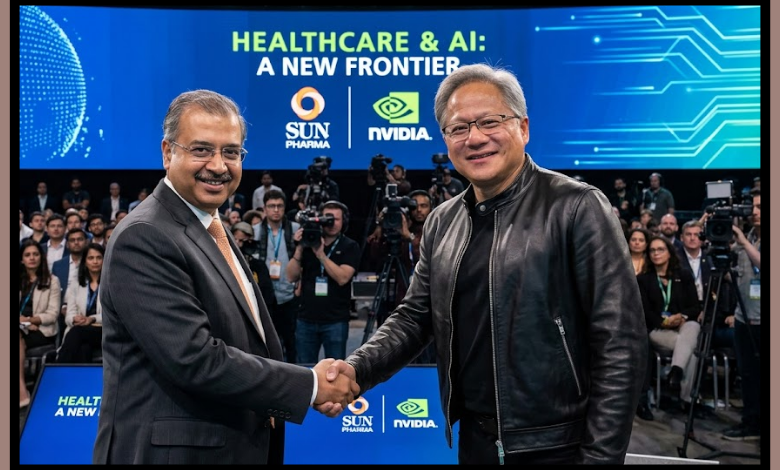
Both Dilip Shanghvi and Jensen Huang are entrepreneurs of global significance. While the first is an owner of Sun Pharmaceutical Industries and a key personality of the international pharmaceutical industry, the second one founded NVIDIA company and has contributed to turning graphics processors into a must-have component of accelerated computing and artificial intelligence. The origins, education, management style, and career path of both entrepreneurs provide a good subject of comparison as they come from different sectors – healthcare and technology. Both entrepreneurs had specific competencies and created businesses with the worldwide influence through strategic approach. In this paper, their biography, career, family life, accomplishments, companies, and business philosophy will be discussed.
Instant Bio
| Profile Detail | Dilip Shanghvi | Jensen Huang |
| Full Name | Dilip Shantilal Shanghvi | Jen-Hsun Huang, commonly known as Jensen Huang |
| Date of Birth | October 1, 1955 | February 17, 1963 |
| Age | 70 as of August 2026 | 63 as of August 2026 |
| Birthplace | Amreli, Gujarat, India | Taipei, Taiwan |
| Nationality | Indian | Taiwanese-American |
| Citizenship | India | Taiwan and United States |
| Profession | Businessman and pharmaceutical entrepreneur | Businessman, electrical engineer, and technology entrepreneur |
| Famous For | Founding Sun Pharmaceutical Industries | Co-founding NVIDIA and leading its development |
| Parents | Father was a pharmaceutical distributor; mother’s details are not widely documented | Huang Hsing-tai and Lo Tsai-hsiu |
| Siblings | One brother is documented | One older brother |
| Education | Bachelor of Commerce, University of Calcutta | BSEE, Oregon State University; MSEE, Stanford University |
| Career Beginning | Helped in his father’s pharmaceutical distribution business | Worked at AMD and LSI Logic before NVIDIA |
| Major Breakthrough | Building Sun Pharma through focused pharmaceutical expansion and acquisitions | NVIDIA’s GPU strategy and expansion into accelerated computing and AI |
| Major Television Work | Not applicable | Not applicable |
| Major Film Work | Not applicable | Not applicable |
| Production Company or Major Business Work | Sun Pharmaceutical Industries | NVIDIA |
| Major Awards | Padma Shri, EY World Entrepreneur of the Year, other business honors | IEEE Founder’s Medal, Robert N. Noyce Award, IEEE Medal of Honor, other honors |
| Major Achievements | Built Sun Pharma into a major global pharmaceutical company | Helped establish GPU computing as a foundation for modern AI |
| Spouse | Vibha Shanghvi | Lori Huang |
| Marital Status | Married | Married |
| Marriage Year | Not widely documented in authoritative public sources | 1985 |
| Previous Marriages | None publicly documented | None publicly documented |
| Children | Two | Two |
| Family Background | Raised in a family connected to pharmaceutical distribution | Born into a Taiwanese family and later moved to the United States |
| Career Highlight | Expansion of Sun Pharma into global markets | Leading NVIDIA through successive computing platform shifts |
| Signature Work | Sun Pharmaceutical Industries | NVIDIA accelerated-computing and GPU platform |
| Years Active | Since the early 1980s | Since the mid-1980s |
| Current Career Focus | Executive leadership and strategic direction at Sun Pharma | Leading NVIDIA’s semiconductor, accelerated-computing, and AI strategy |
The biographies show a clear contrast in professional specialization. Shanghvi developed his career in pharmaceuticals after gaining early experience through his family’s medicine distribution business, while Huang trained as an electrical engineer before working in the semiconductor industry. Sun Pharma says Shanghvi holds a Bachelor of Commerce degree, while NVIDIA confirms Huang’s engineering degrees from Oregon State University and Stanford University.
Early Life and Educational Background
Dilip Shanghvi was born in Gujarat in 1955 and grew up in Kolkata, where his father operated a pharmaceutical distribution business. His early exposure to medicines and commercial operations gave him practical knowledge of the industry before he became an entrepreneur. He later earned a Bachelor of Commerce degree from the University of Calcutta. That combination of family business experience and formal education helped shape his understanding of pharmaceutical markets and business operations.
Jensen Huang was born in Taipei in 1963 and spent part of his childhood in Taiwan and Thailand before moving to the United States. His education eventually took him into electrical engineering, first at Oregon State University and later at Stanford University. NVIDIA confirms that Huang earned a BSEE and an MSEE, giving him a strong technical foundation for the semiconductor industry. His education became particularly relevant as computing hardware became increasingly important to graphics and artificial intelligence.
The early careers of Dilip Shanghvi and Jensen Huang also show different routes into entrepreneurship. Shanghvi learned about pharmaceuticals through direct involvement in his father’s business before establishing his own company. Huang gained professional experience at Advanced Micro Devices and LSI Logic before co-founding NVIDIA with other engineers. These experiences allowed both entrepreneurs to understand their industries before making major independent business decisions.
Their educational paths also highlight different forms of preparation for leadership. Shanghvi’s commerce background supported his development as a business strategist in pharmaceuticals, while Huang’s engineering education supported a technology-led approach to product development. Neither entrepreneur relied on a conventional celebrity profile to build recognition. Instead, their reputations grew primarily through company performance, innovation, and sustained leadership.
Building Sun Pharma and NVIDIA
Shanghvi founded Sun Pharmaceutical Industries in 1983 after borrowing a small amount of money from his father and initially focusing on psychiatric medicines. The company later expanded through product development, international operations, and acquisitions. One of its most significant moves was the acquisition of Ranbaxy Laboratories, which Forbes describes as a $4 billion transaction. This expansion helped Sun Pharma strengthen its position in the global pharmaceutical market.
Huang founded NVIDIA in 1993 and has served as its president and CEO since the company’s beginning. NVIDIA initially concentrated heavily on graphics, but the company’s GPU technology eventually became important for parallel computing and machine learning. NVIDIA states that the invention of the GPU in 1999 helped redefine computer graphics and later contributed to the rise of modern AI. That technological transition became one of the defining achievements of Huang’s career.
The scale of their companies reflects the industries they serve. Sun Pharma develops and markets pharmaceutical products across numerous therapeutic categories and international markets, while NVIDIA supplies computing platforms and chips used across gaming, data centers, AI, robotics, and other fields. Both businesses depend heavily on specialized knowledge, research, investment, and long-term planning. Their founders therefore built value by developing capabilities that could remain relevant as markets changed.
Their growth strategies, however, were not identical. Shanghvi became particularly known for disciplined expansion and acquisitions within pharmaceuticals, while Huang’s strategy has focused strongly on technological platforms and anticipating new computing architectures. Sun Pharma’s business is influenced by healthcare regulation, drug development, manufacturing, and market access. NVIDIA’s business is shaped by semiconductor engineering, software ecosystems, data-center demand, and AI development.
Leadership, Achievements, and Global Influence
Shanghvi’s leadership is closely associated with gradual expansion and strategic decision-making. Forbes describes his approach as favoring incremental growth rather than dramatic leaps, while Sun Pharma’s official profile highlights his involvement in international markets, business strategy, business development, and research and development. His recognition includes the Padma Shri and several major entrepreneurship and business awards.
Huang has received extensive recognition for his contribution to computing and semiconductor technology. NVIDIA notes that he has been elected to the National Academy of Engineering and has received honors including the Robert N. Noyce Award and the IEEE Founder’s Medal. In 2026, he was also appointed to the U.S. President’s Council of Advisors on Science and Technology. These achievements reflect his influence beyond NVIDIA’s commercial operations.
Financially, the two entrepreneurs have also achieved exceptional success, although billionaire wealth estimates change with market prices. Forbes listed Shanghvi’s real-time net worth at $26.5 billion on August 17, 2026, while its 2026 annual billionaire ranking placed him at $25.6 billion based on March 1 data. These figures illustrate the scale of his ownership and connection to the pharmaceutical business but should be treated as time-specific estimates.
Huang’s influence has grown alongside NVIDIA’s role in AI infrastructure and accelerated computing. His leadership has connected GPU technology with modern machine learning, data centers, robotics, and generative AI. This makes his career particularly relevant to discussions about the future of computing. Shanghvi, meanwhile, remains an important example of how an Indian pharmaceutical enterprise can expand internationally through specialization, acquisitions, and long-term business development.
Business Lessons and Current Career Focus
The comparison between Dilip Shanghvi and Jensen Huang offers useful lessons for entrepreneurs and business students. Both leaders developed expertise in industries where technological or scientific knowledge creates significant barriers to entry. They also stayed involved with their companies for decades, allowing them to maintain continuity while adapting to changing markets. Their careers show that sustainable growth often requires patience rather than chasing every short-term opportunity.
Another shared lesson is the importance of identifying structural changes early. Shanghvi expanded Sun Pharma internationally as pharmaceutical markets became increasingly global, while Huang continued investing in GPU computing as its applications moved beyond traditional graphics. Their companies benefited because their leaders were prepared to support long-term developments before those opportunities reached their full scale. This type of strategic patience can be especially valuable in capital-intensive industries.
For readers researching successful entrepreneurs, the two careers also demonstrate that there is no single route to building a global company. Shanghvi’s path began with commerce and pharmaceutical distribution, while Huang’s route developed through engineering and semiconductor technology. One built a healthcare enterprise through products, manufacturing, research, and acquisitions; the other developed a computing platform through hardware, software, and technological ecosystems. Both approaches required specialized knowledge and consistent execution.
Key lessons from their professional journeys include:
- Building deep industry knowledge before expanding can create a durable competitive advantage.
- Long-term investment can become more valuable when industries undergo major structural changes.
- Strategic acquisitions can accelerate international expansion when they complement existing capabilities.
- Technical expertise can help entrepreneurs identify important technology shifts earlier.
- Strong leadership requires adapting a company without losing its central strategic direction.
- Sustainable business growth usually depends on execution, patience, and continuous learning.
- Check This Out :> Marshawn Kneeland Parents Siblings Family and Football Journey
(FAQs)
What makes their stories especially useful?
The most important connection is not that both became wealthy business leaders. It is that each built an organization capable of operating at global scale while remaining closely associated with a clear founder-led vision. Their careers provide contrasting examples of entrepreneurship in pharmaceuticals and advanced technology. That makes their biographies useful for readers interested in business strategy, leadership, innovation, and global companies.
Are their family backgrounds similar?
Their family circumstances were different, although both benefited from early exposure to professional environments. Shanghvi grew up around a pharmaceutical distribution business, while Huang came from a Taiwanese family and later moved to the United States. Their early experiences influenced the industries and skills that shaped their later careers.
What companies did they establish?
Dilip Shanghvi founded Sun Pharmaceutical Industries, while Jensen Huang co-founded NVIDIA. Both companies expanded dramatically beyond their original beginnings and became internationally important businesses in their respective sectors.
Why are they important entrepreneurs?
Their importance comes from the lasting impact of their companies rather than celebrity status. Shanghvi helped build a major pharmaceutical enterprise, while Huang helped establish GPU-based accelerated computing as a crucial foundation for modern artificial intelligence.
What does this comparison show?
The comparison shows how different forms of expertise can lead to global business success. One career developed through pharmaceuticals and strategic expansion, while the other grew through semiconductor engineering and technological innovation.
Conclusion
There is a great difference between Dilip Shanghvi and Jensen Huang with regard to entrepreneurship and the kind of business leaders they have become. Shanghvi has been able to turn Sun Pharma into a global healthcare firm by expanding and making strategic acquisitions, while Huang has transformed NVIDIA from a graphics firm into an accelerated computing and artificial intelligence giant. Both these business leaders come from different backgrounds in education and industry, but both show the importance of having specialized knowledge, being patient and innovative. Both Shanghvi and Huang show why it makes sense for founder-led firms to retain influence as they evolve along with the changing market conditions.
WANT TO SHOW YOUR ARCTICLE ON THE UK WIRE
CONTACT US~ Theukwire.com@gmail.com